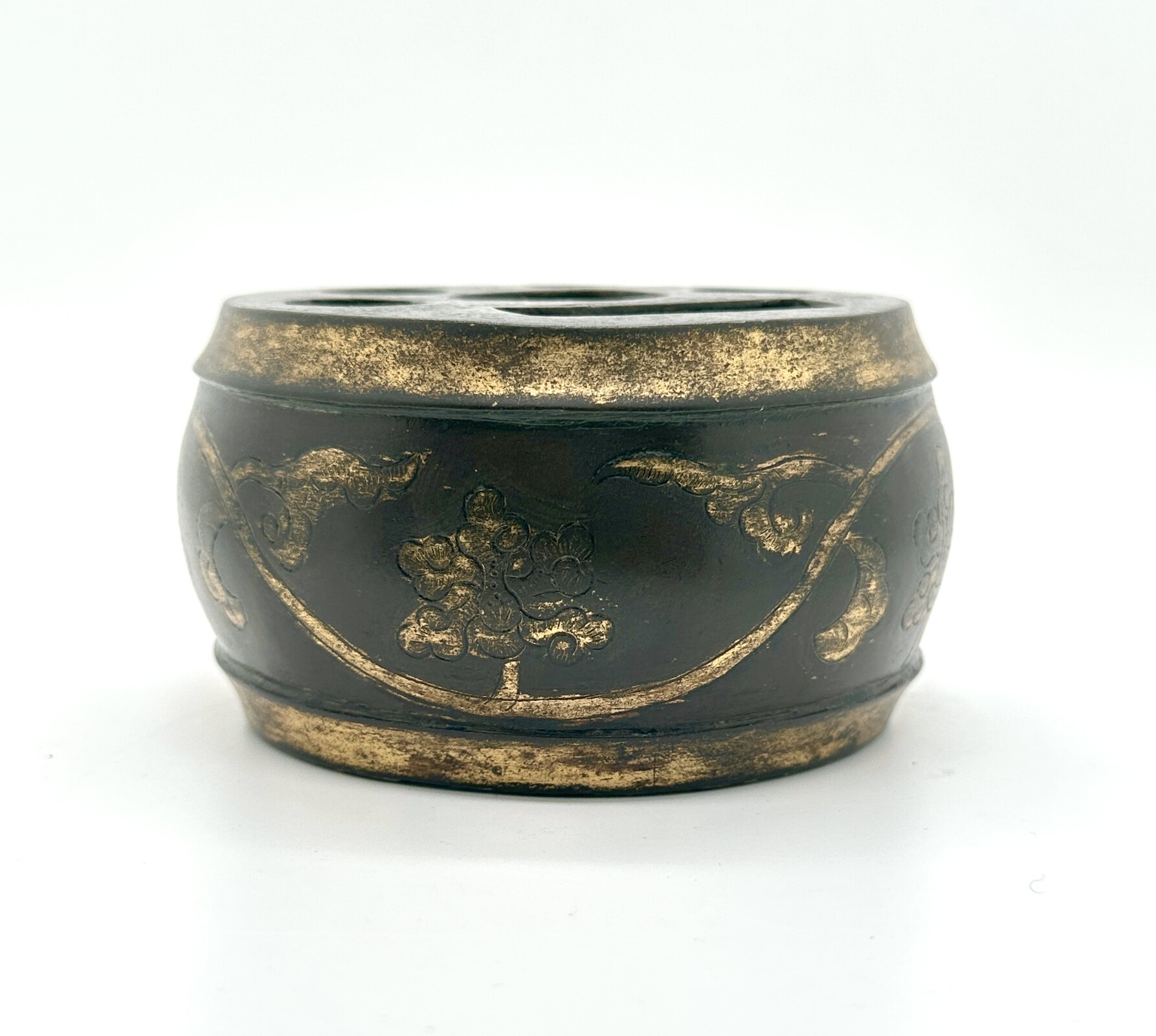
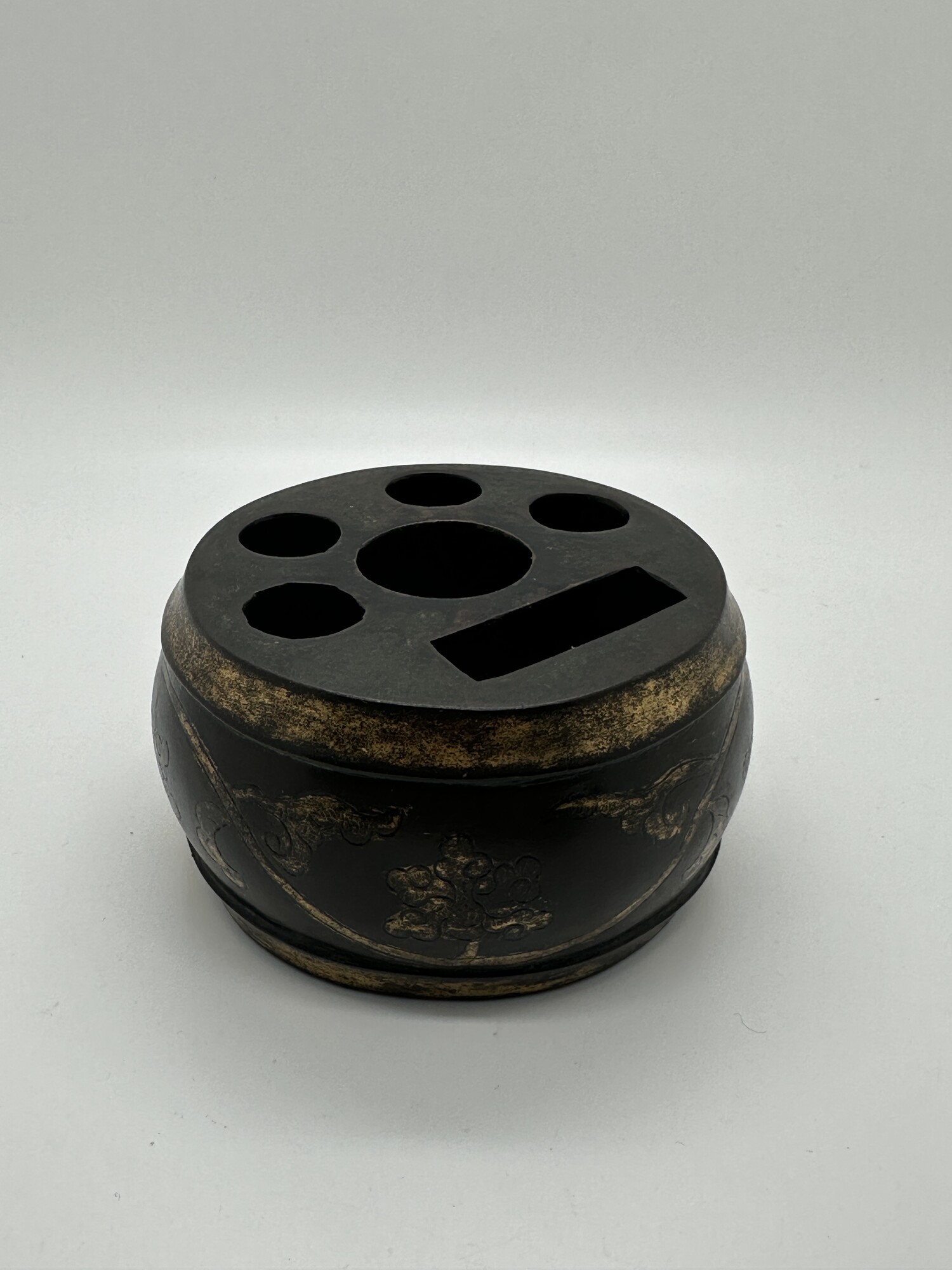
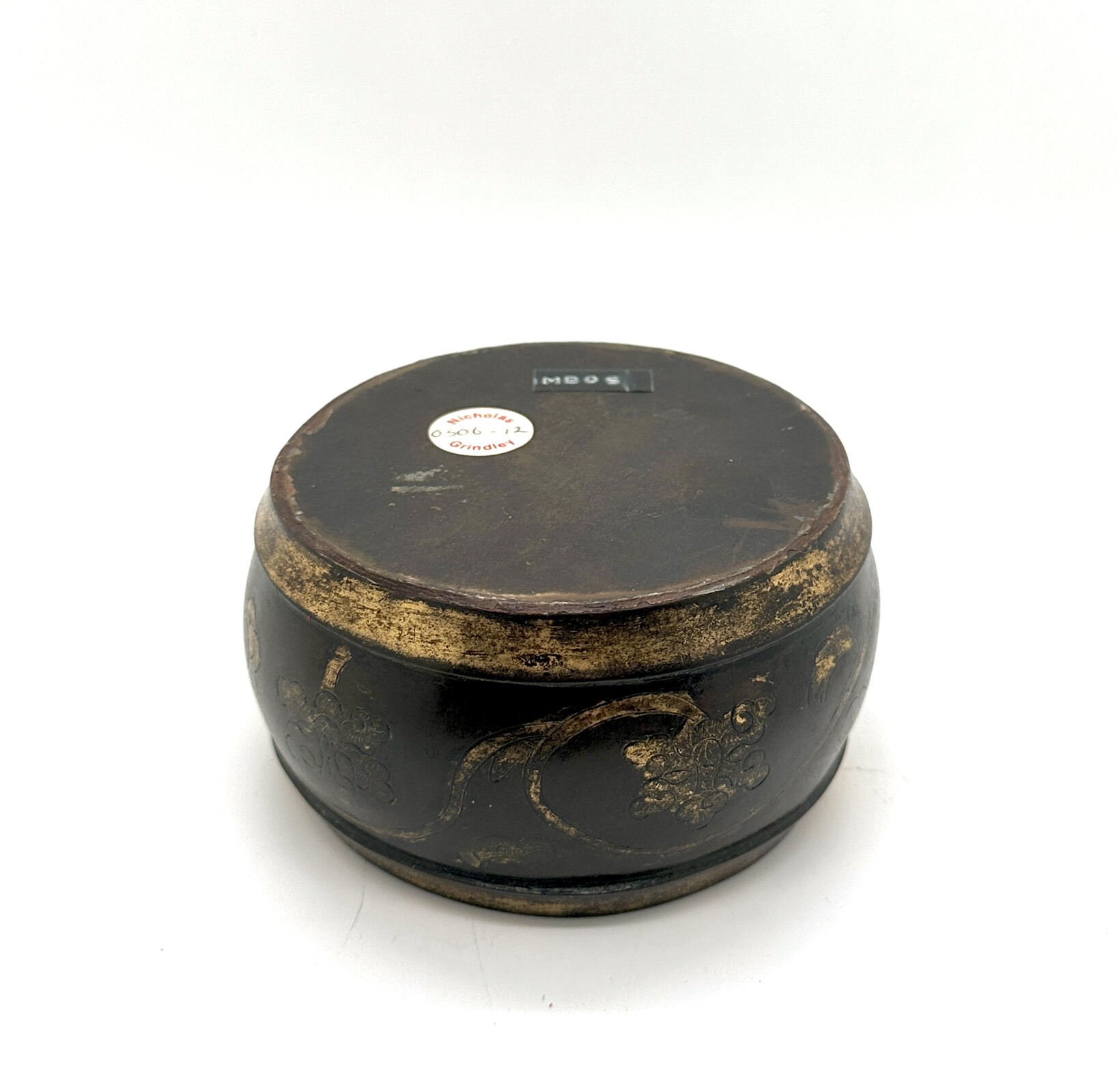
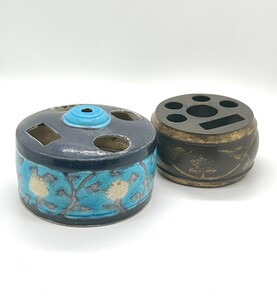
Early Ming dynasty, 16th century
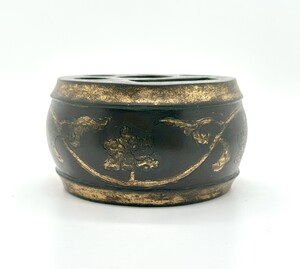
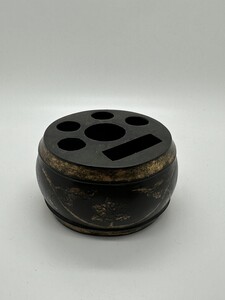
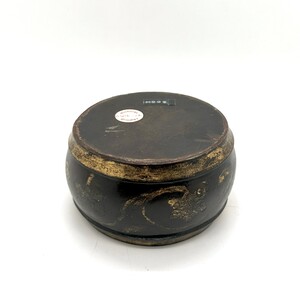
The top of the compressed drum-shaped holder is pierced with four circular and one rectangular apertures for holding brushes and an inkstick.
The curved sides are decorated with lotus heads issuing from a leafy scroll between wide bands, all picked out in gilt
Diameter 11.5 cm
Provenance: The Sam Marsh collection
Nicholas Grindley, London
Christie's Hong Kong, 31 March-1 April 1992, Lot 986
Published: Sam Marsh, 'Brushpots, A Collector's View', Hong Kong 2020
Drum-shaped brush- and inkstick holders were produced in Chinese porcelain during a rather short period, and generally dated to the first half of the 16th century.
They usually have three or four circular and and one rectangular apertures at the top for holding brushes and an inkstick.
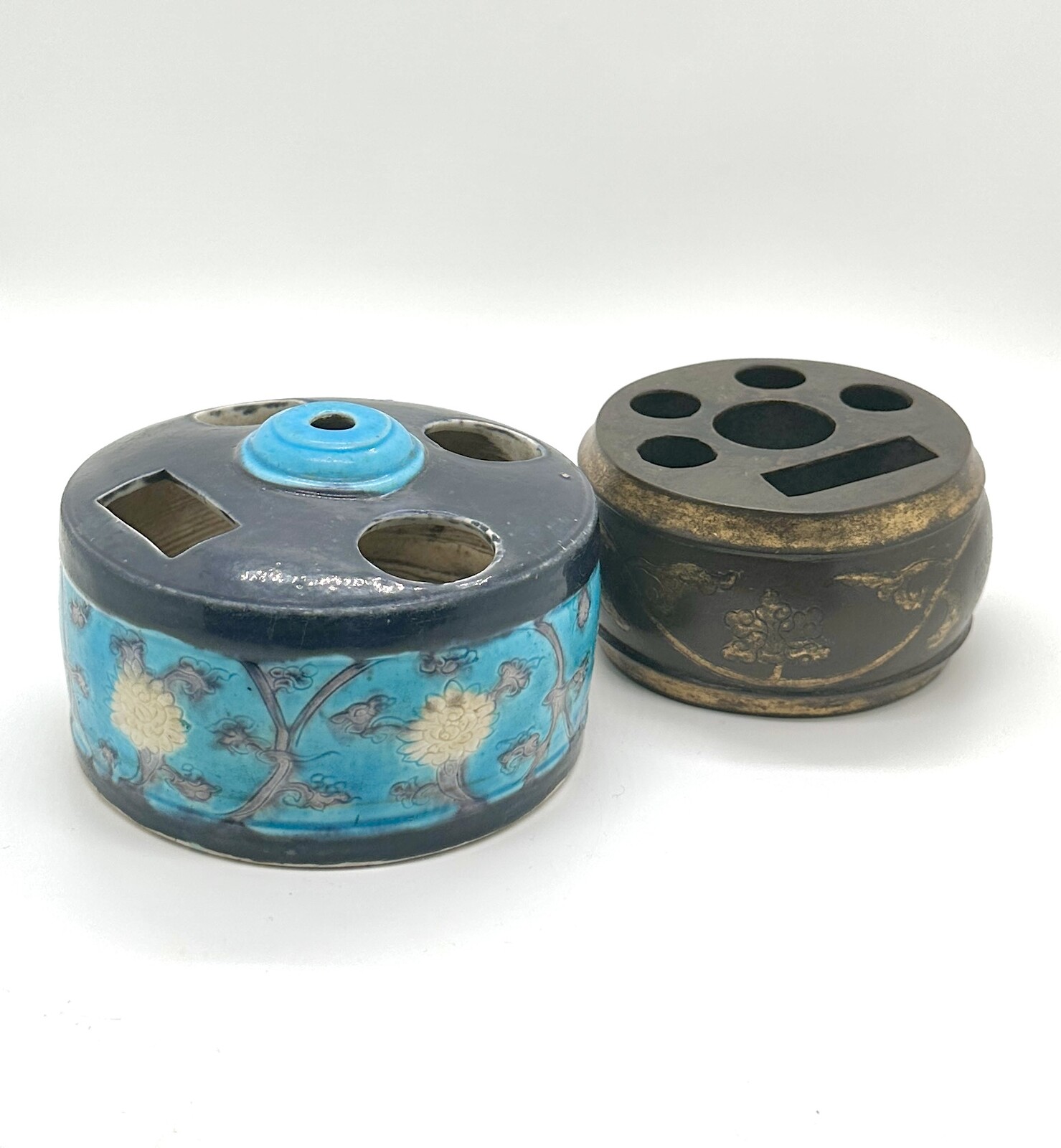
Ming blue and white and the 'fahua' type are known (See for an example from our collection images 4-5 and our website No. PF49).
Iti s very rare to find similar objects made of materials other than porselain, such as our bronze example, which probably predate the Ming porcelain ones.
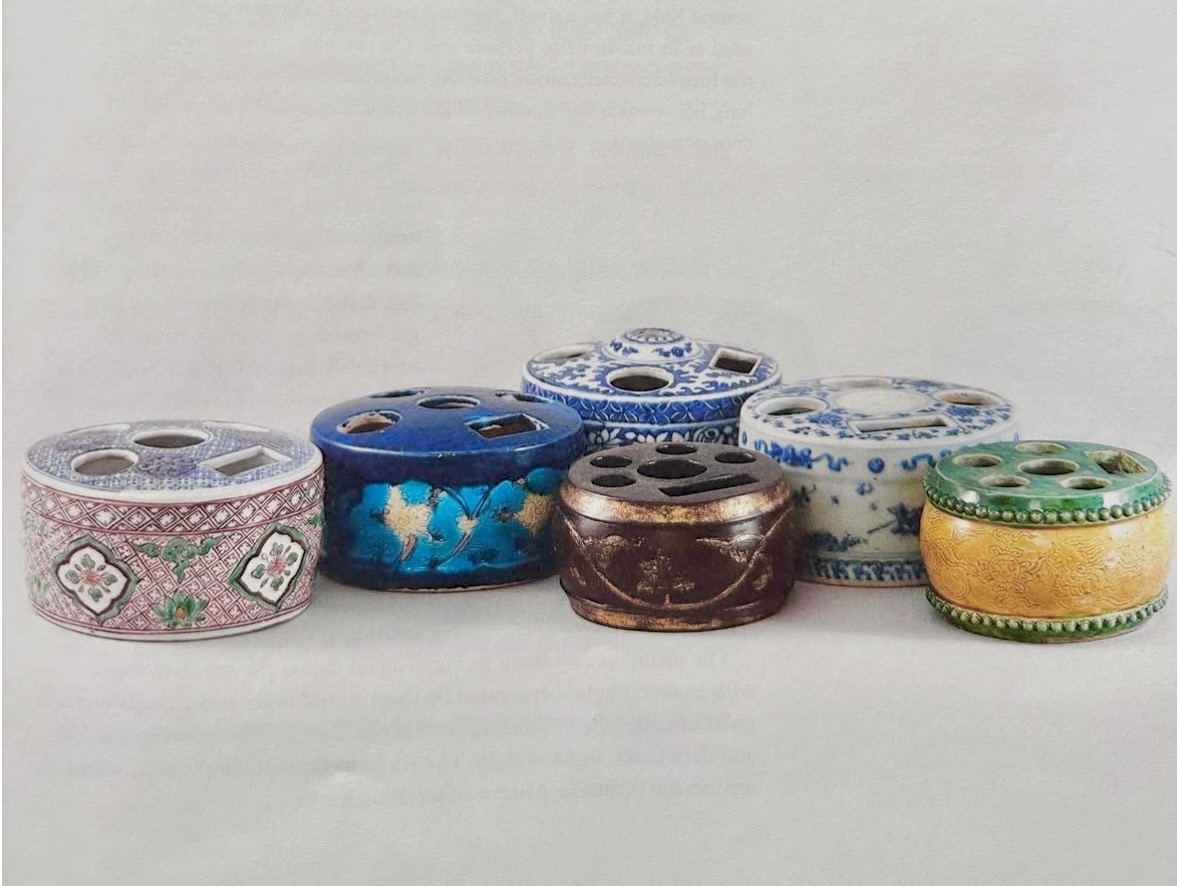
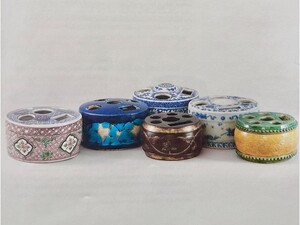
Image 5 shows a series of various examples from the Sam Marsh collection, which includes our bronze one.
The use of these brush- and inkstick receptables becomes clear as there exists a painting of the famous philosopher Wang Yangming (1472-1529) seated at his writing desk. On the desk we can see, amongst others, a similar vessel, the circular holes holding three brushes with tips upwards (see images 5-6). It is assumed that the rectangular opening is meant to hold an inkstick. (See G. Tsang and H. Moss, 'Arts from the Scholar's Studio', Hong Kong. 1986, pp. 226-227).
